01
Free Roof Inspection & Quote
A no-cost inspection with photos of anything we find, so you can see it yourself.
Call (02) 9100 0388Two-storey brick homes, acreage roof runs and brand-new Colorbond estates all fail differently. We inspect, photograph what we find and put it in writing before anyone quotes a figure.
Drive the ridge along Old Northern Road from Castle Hill out to Round Corner and you pass four different roofing problems in fifteen minutes. Big two-storey brick homes with multi-plane roofs and deep hidden valleys. Half-acre blocks at Glenhaven and Dural with mature gums leaning over the gutter line. Acreage at Kenthurst and Annangrove where the house, the machinery shed and the stables all need doing at once. Then the far end of Windsor Road, where Box Hill and North Kellyville are still being built out in sheet Colorbond.
Each of those fails in its own way, and the fix that suits one is wrong for the next. That is the whole job here.
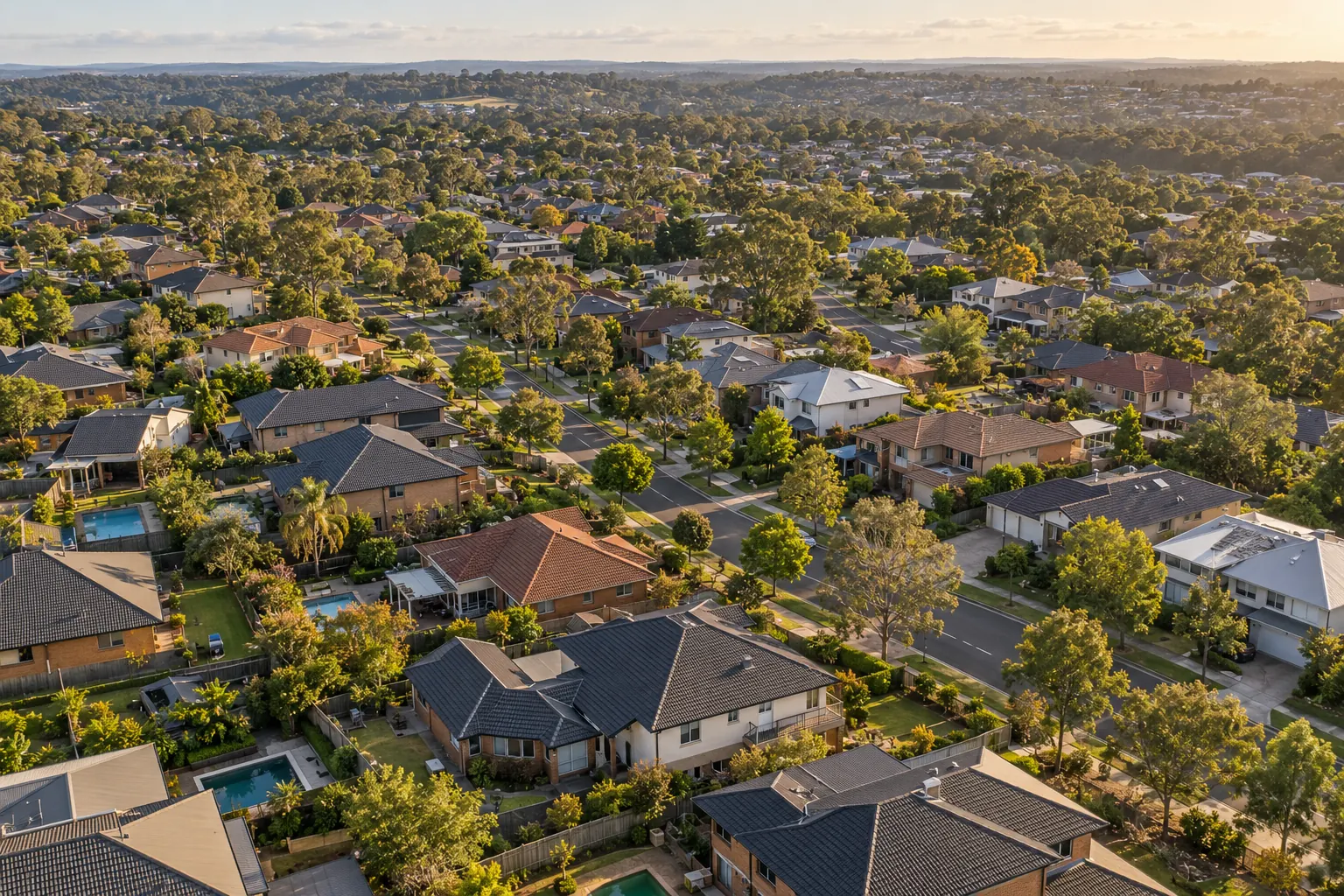
West Pennant Hills sits beside Cumberland State Forest on Castle Hill Road, and Bidjigal Reserve runs up the Darling Mills Creek catchment behind Baulkham Hills and North Rocks. Cherrybrook, Glenhaven and the eastern side of Castle Hill are all heavily treed suburbs on what were orchard blocks. The result is constant organic load on roofs that were never designed for it.
What we find, in order of frequency:
Most of those are repairs, not replacements. The expensive version is the one that got left for three more winters.
Castle Hill, Baulkham Hills, Kellyville, Glenhaven and West Pennant Hills are full of them: complex hip-and-valley roofs, multiple planes, dormers, skylights and flashings against two-storey brick walls. The leaks are almost always at a junction rather than in the open field of tiles. Access and safe edge protection drive the price more than the materials do.
Dural, Middle Dural, Kenthurst, Annangrove, Galston and Maraylya bring long uninterrupted roof runs, large sheds, and often tank water rather than mains pressure. Long runs are actually simpler to re-sheet, but they are unforgiving on fall, fixings and flashing laps.
Winston Hills and the older parts of Baulkham Hills were built out as project homes with concrete tile. Those tiles are often still structurally sound at fifty years old while the pointing, sarking and valley iron underneath have long since gone. That is the classic restoration candidate.
Rouse Hill, Box Hill, North Kellyville and Beaumont Hills are mostly sheet metal and under ten or fifteen years old. Problems there are workmanship and detailing, not age: missed fixings, short flashing laps, poorly sealed penetrations and gutters that do not fall the way they should.
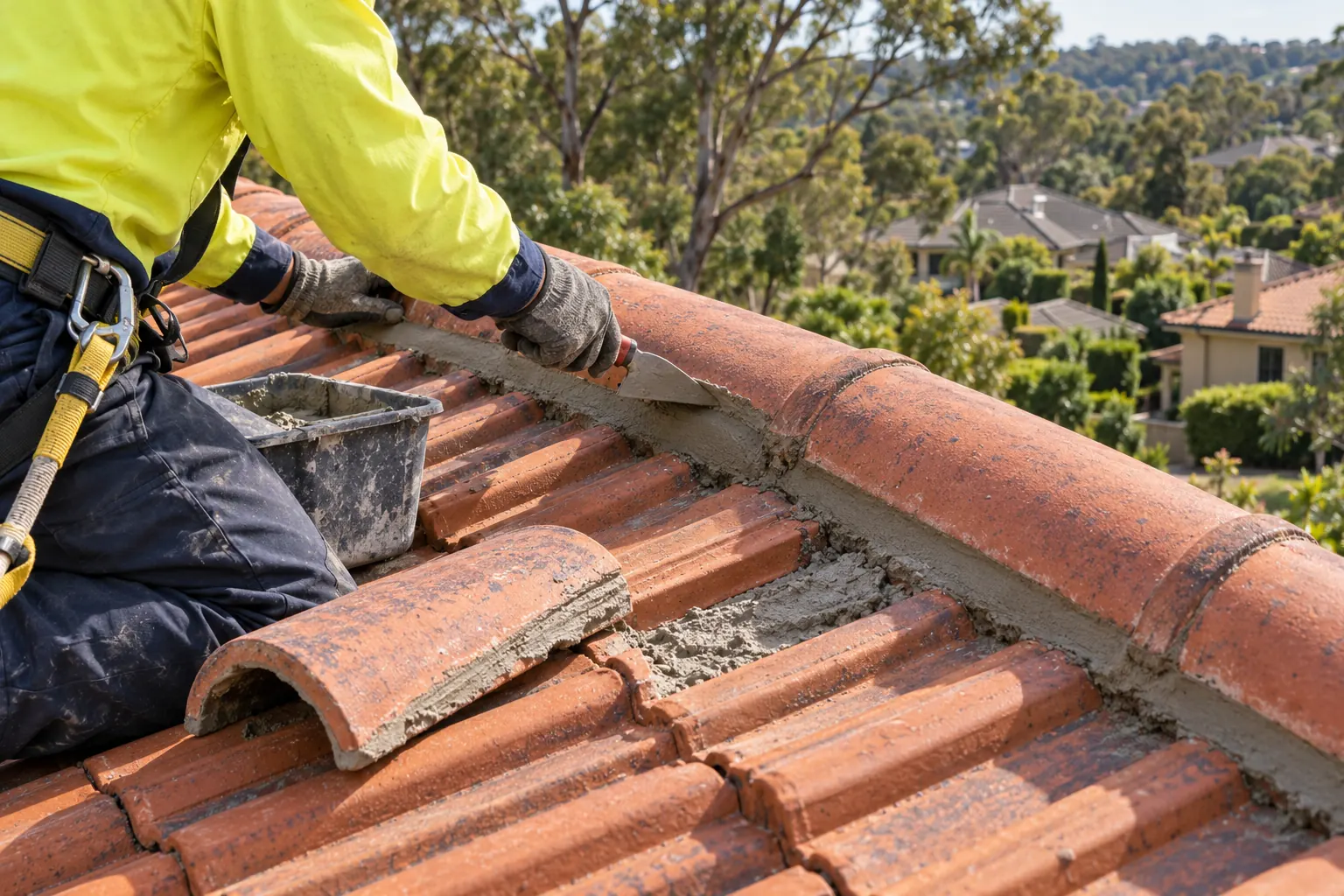
The exposed high ground through the district takes the brunt of wind, and the heavily treed suburbs take the brunt of what the wind brings down. The pattern after a serious front is predictable: lifted or slipped tiles on the windward plane, ridge caps off, branches through gutters and the occasional limb through the roof itself. If that is your situation now, the storm and emergency page explains what a make-safe does and what it does not.
No roofer can quote a Hills roof honestly over the phone. These are the things that actually change the number:
So the inspection comes first, it is free, and the written quote follows it. Call (02) 9100 0388 if you would rather just talk it through.
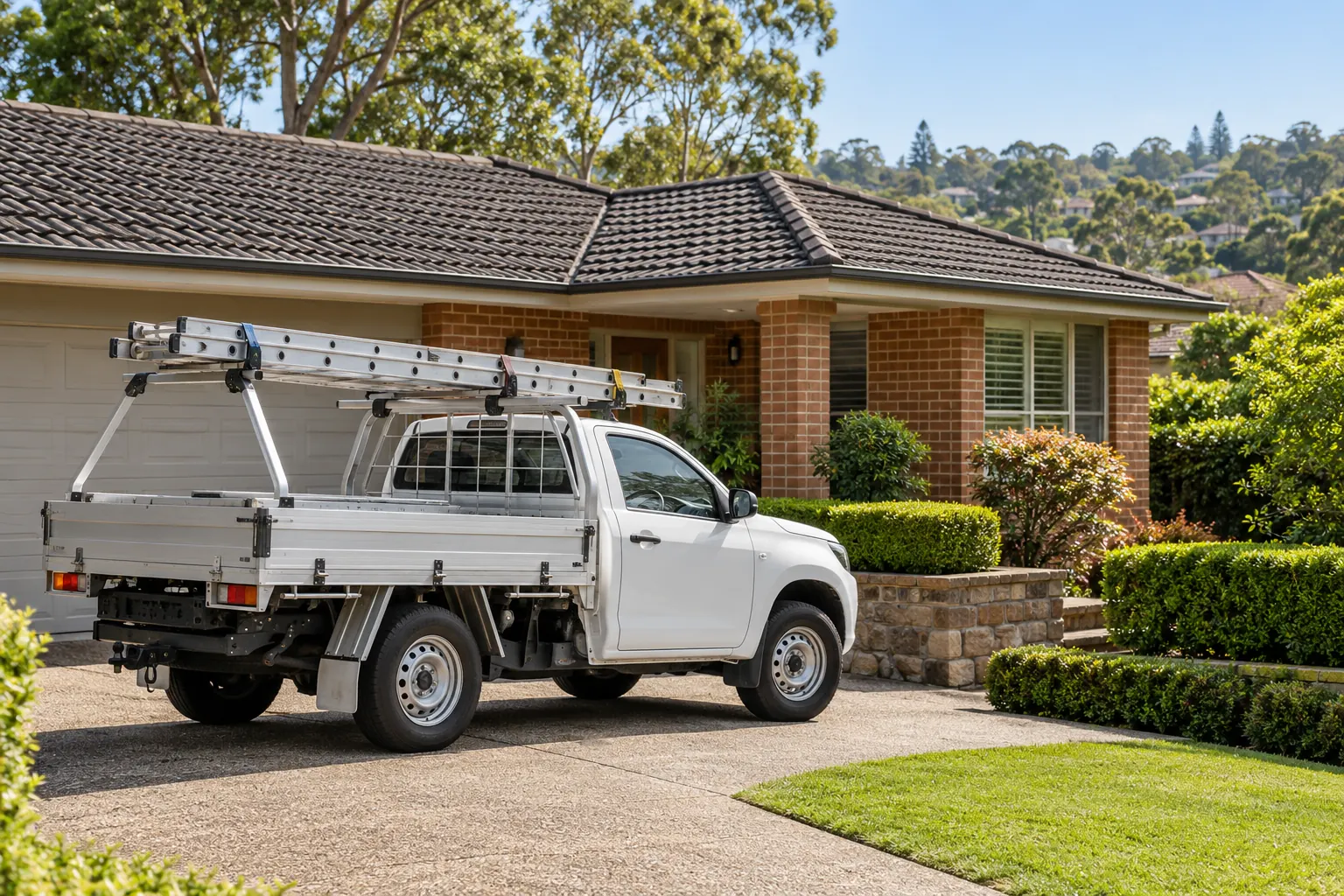
Work is carried out by established, licensed and insured roofing contractors working to NSW Fair Trading requirements. In NSW, residential building work over $5,000 in labour and materials has to be done under licence and under a written contract, and work over $20,000 carries Home Building Compensation cover. You should expect to see that paperwork, not be asked to take it on trust.
Blocks on the northern and western edges of the district — around Galston, Middle Dural, Kenthurst, Annangrove and Maraylya, near the Berowra Valley and Cattai bushland — are frequently mapped as bushfire prone. That has real roofing consequences: ember-proof detailing, sealed roof spaces and non-combustible gutter mesh. Your section 10.7 certificate is the document that tells you where you stand.
Book a free roof inspection and you get photos of anything found, an explanation of what is urgent versus what can wait a season, and a written quote. No obligation, and no pressure to decide on the spot.
See where we work across the twenty suburbs we cover, or read how this service is put together before you call.
01
A no-cost inspection with photos of anything we find, so you can see it yourself.
Call (02) 9100 038802
Work is carried out by established, licensed and insured roofing contractors working to NSW Fair Trading requirements.
Call (02) 9100 038803
Gutter and valley solutions that cope with established gums, not a token leaf guard.
Call (02) 9100 038801
Repairs on Hills District roofs, where blocked valleys under established gums and corroded valley iron cause most leaks.
See roof repairs02
Re-roofing large two-storey Hills homes and acreage properties, where access and roof complexity drive the job as much as floor area.
See roof replacement03
Colorbond roofing across the Hills, from Castle Hill rebuilds to long shed and acreage roof runs at Kenthurst.
See metal & colorbond roofing04
Restoration for Hills District tile roofs: clearing years of leaf debris, rebedding ridges and recoating.
See roof restoration05
Gutter replacement and heavy-duty leaf guard for Hills properties ringed by mature gums.
See gutter repair & replacement06
Storm response across the Hills, including fallen-limb damage and wind-lifted ridge capping and sheet.
See storm & emergency roof repairs07
Detailed roof inspections across the Hills District, including the two-storey and hard-access roofs other inspectors skip.
See roof inspections & reportsIt usually does, and the reason is access rather than the repair itself. A single broken tile on a single-storey roof is a ladder job. The same tile on a two-storey Castle Hill or Glenhaven roof may need edge protection, a longer ladder set-up and a second person. The repair is identical; getting to it safely is the cost. We tell you which part of the quote is access before you agree to anything.
Yes, but the water source gets agreed first. Pressure cleaning a large acreage roof or a long shed run can pull a serious volume out of a tank, and nobody wants to finish a roof restoration with an empty tank in February. On tank-only properties we work out the supply during the inspection and factor it into the method, rather than discovering it on the day.
Across the older Hills suburbs, under established gums, yes. The failure is rarely the gutter itself; it is the valley and the gutter behind a blocked outlet backing water up under the tiles. A properly specified mesh sized to the debris you actually get is worth more than a token guard. If your block is bushfire prone, the mesh has to be non-combustible metal, not plastic.
A like-for-like replacement is normally treated as maintenance rather than development, so most homeowners need nothing. It changes if the property is heritage listed, if you are altering the roof form or pitch, or if the land is mapped as bushfire prone. Your section 10.7 planning certificate shows the constraints, and we flag anything we can see from the roof during the inspection.
Active water through a ceiling is treated as urgent. The first visit is a make-safe: find the entry point, stop the water getting in, and protect the ceiling and insulation below it. The permanent repair is quoted after that, once the roof is dry enough to see what actually failed. Call (02) 9100 0388 and describe where the stain is and what the weather was doing.
Tell us what you need and we'll get straight back to you. Prefer to talk? Call (02) 9100 0388 and speak to someone local.
Call (02) 9100 0388