Roof Repairs
Repairs on Hills District roofs, where blocked valleys under established gums and corroded valley iron cause most leaks.
Learn more →Colorbond and steel roofing across Box Hill, Rouse Hill, Kenthurst and the older Hills suburbs. Sheet profiles, fixings and flashings done properly.
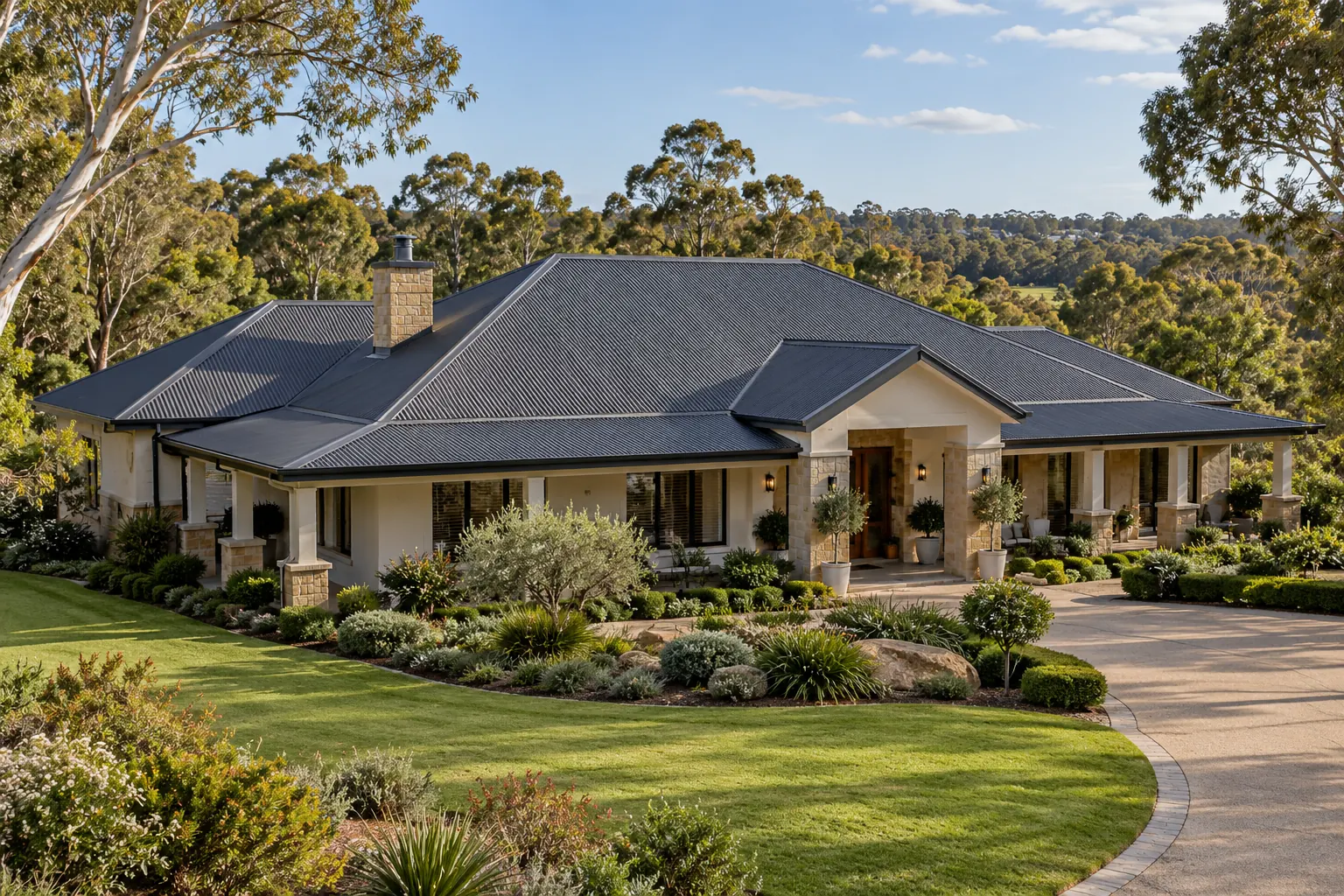
At the Windsor Road end of the district, Box Hill, Rouse Hill and North Kellyville are sheet-metal suburbs by default — thousands of homes under fifteen years old, almost all of them Colorbond, almost all of them in a handful of colours. Work there is repair, defect rectification and extension matching.
Head the other way, up the ridge past Round Corner into Kenthurst, Annangrove, Middle Dural and Maraylya, and metal roofing means something else: long house runs, machinery sheds, stables, hay storage and verandahs, often on properties relying on tank water collected off those exact roofs.
Then there is the third group — older tile homes in Castle Hill, Cherrybrook, Glenhaven and West Pennant Hills converting to steel because they are tired of pulling gum leaf out of valleys twice a year.
Thickness matters too. The difference between a 0.42 and a 0.48 base metal thickness shows up in foot traffic denting and in wind performance on exposed ridgelines.
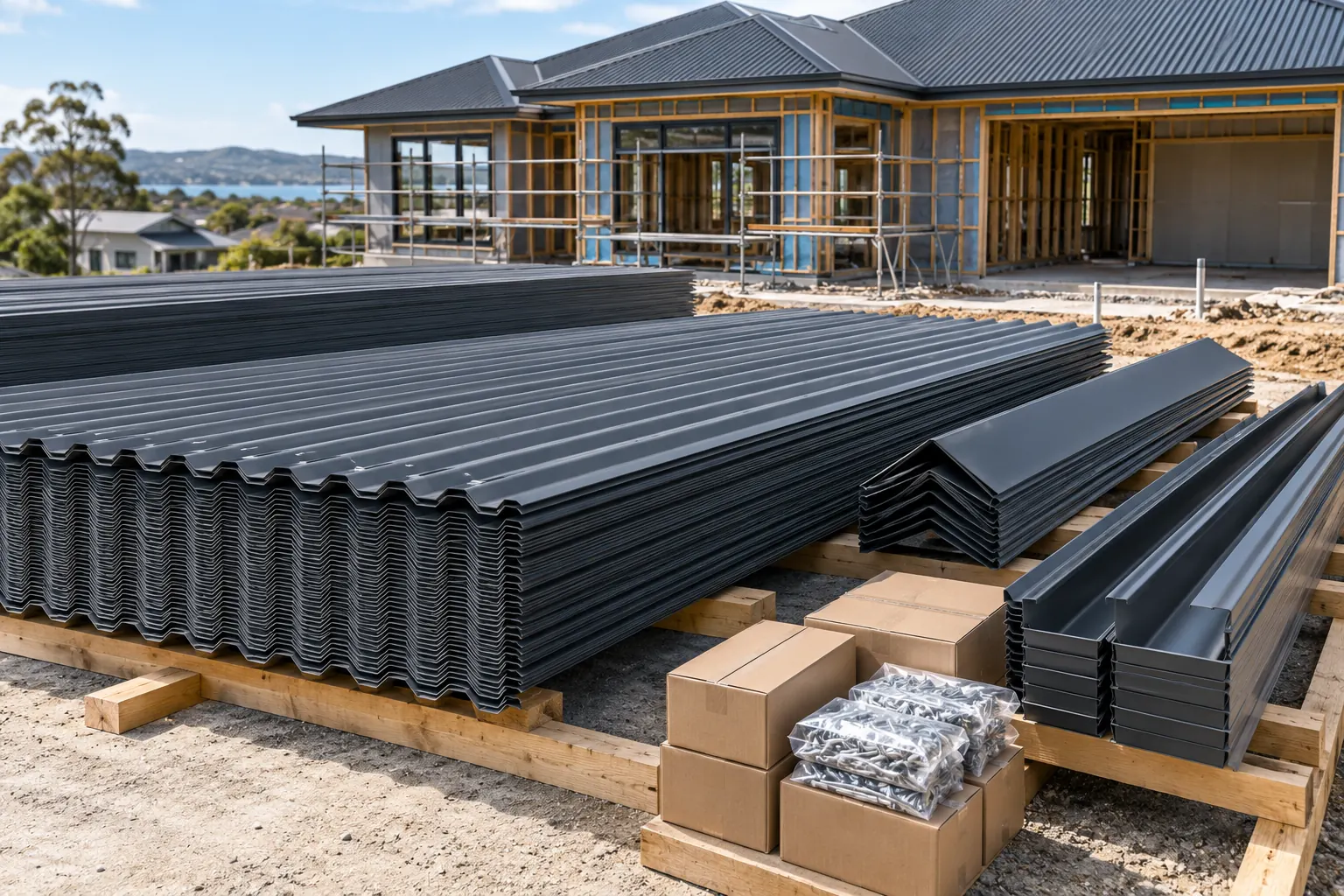
Sheet metal roofing is simple material and unforgiving detail. These are the things worth asking any roofer about:
Fixings. Correct screw type and length, driven into the crest or the pan as the profile requires, to the right depth. Over-driven screws crush the washer and the seal fails; under-driven screws leave the washer proud and the sheet lifts. On older roofs, replacing fixings is sometimes the entire repair.
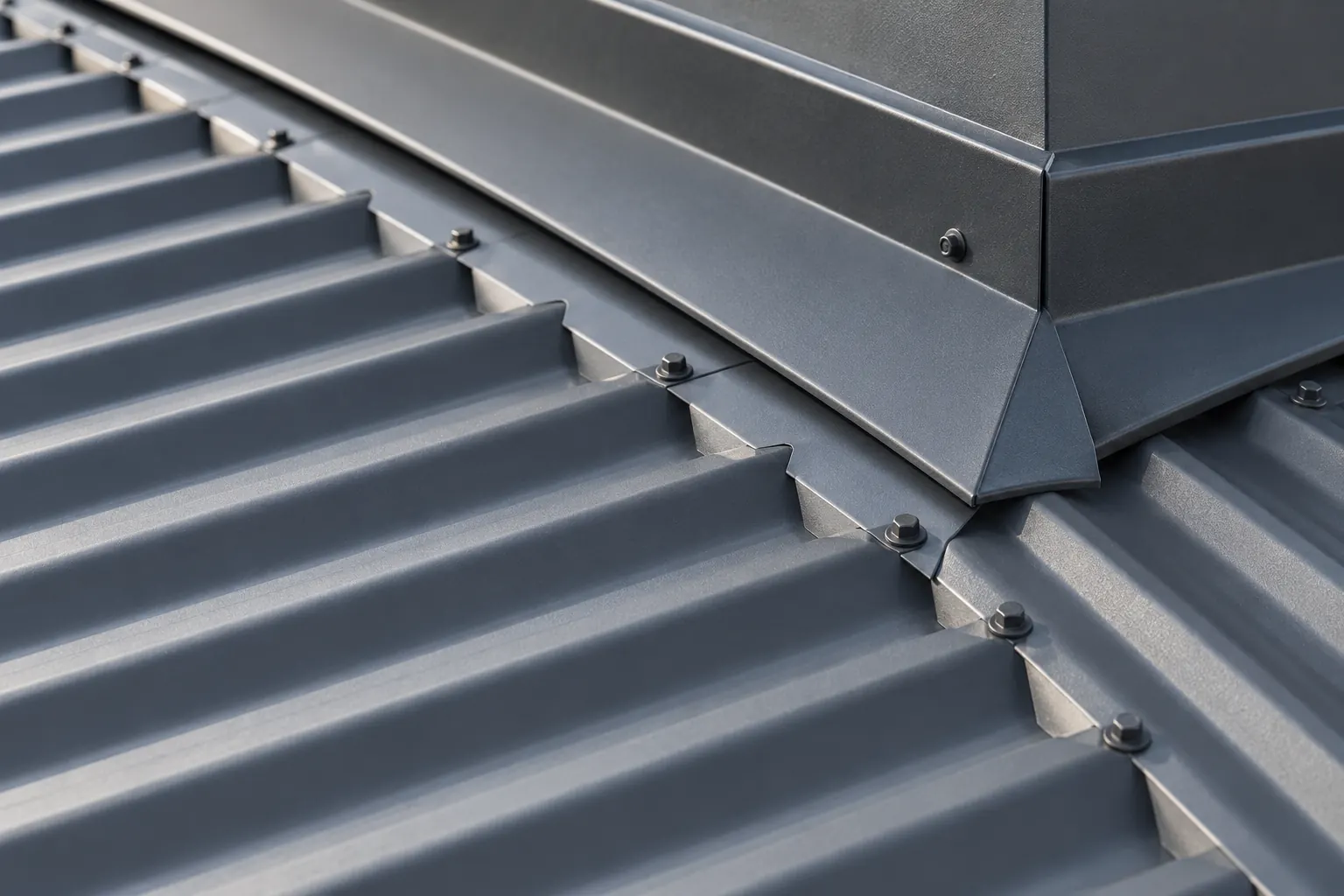
Flashing laps and ends. Ridge, barge, apron, valley and wall flashings all need sufficient lap and the right turn-up. Short laps are the single most common defect found on fast-built estate roofs.
Penetrations. Flues, vent pipes, solar brackets, aerials and air-conditioning penetrations need purpose-made flashings, not sealant. Silicone is a maintenance item, not a roof.
Fall and drainage. Low-pitch runs need accurate fall. Combine insufficient fall with a gutter blocked by leaf from a neighbouring gum and water sits where it was never meant to.
Dissimilar metals. Copper, lead and unprotected steel in contact with Zincalume or Colorbond cause accelerated corrosion. Old lead flashings reused on a new steel roof are a slow leak with a long fuse.
Expansion. Long acreage runs move. Fixing them as though they are short runs tears fixing holes open over a few seasons.
Land around Galston, Middle Dural, Kenthurst, Annangrove and Maraylya sits against the Berowra Valley and Cattai bushland, and large parts of it are mapped as bushfire prone. That changes roofing requirements rather than just recommendations.
The practical implications for a metal roof:
A sealed steel roof is generally easier to detail for ember resistance than a tile roof with thousands of small overlaps. Your section 10.7 planning certificate is the document that establishes whether your block is affected. We flag what we can see; the certificate is the authority.
On acreage, the roof is a catchment. If your property collects drinking water, the coating, any coating overspray, the flashing materials and the first-flush arrangements are part of the roofing conversation, not an afterthought. Lead flashings and unsuitable coatings have no place on a potable catchment. We raise this at inspection on every tank-water property rather than waiting to be asked.
A metal roof is priced on area, complexity, profile and thickness, access, and whatever has to come off first. A 300 square metre tile roof on a two-storey Castle Hill home with six valleys and an upper-level wall junction is a different job to 300 square metres of shed roof at Maraylya, even though the sheet cost is similar.
The genuine variables:
The inspection is free, you get photos, and the quote is written. Call (02) 9100 0388 to talk through a profile and colour, or request a quote.
A metal roof is only as good as what drains it, so gutters and leaf guard often go in at the same time. If your existing roof is tile and still sound, compare the cost against a tile restoration before you commit to switching. Full material changeovers are covered on the roof replacement page.
Metal roofing across Box Hill, Rouse Hill, North Kellyville and the wider Hills service area.
Repairs on Hills District roofs, where blocked valleys under established gums and corroded valley iron cause most leaks.
Learn more →Re-roofing large two-storey Hills homes and acreage properties, where access and roof complexity drive the job as much as floor area.
Learn more →Restoration for Hills District tile roofs: clearing years of leaf debris, rebedding ridges and recoating.
Learn more →Gutter replacement and heavy-duty leaf guard for Hills properties ringed by mature gums.
Learn more →Storm response across the Hills, including fallen-limb damage and wind-lifted ridge capping and sheet.
Learn more →Detailed roof inspections across the Hills District, including the two-storey and hard-access roofs other inspectors skip.
Learn more →Usually, because the estate builders work from a short list of colours and a single profile. Matching needs three things confirmed: the colour name, the profile, and the sheet thickness. We take the details off the existing roof rather than guessing from a photo. If a colour has been superseded, the nearest current match is shown to you before anything is ordered.
It is physically possible and it is rarely a good idea. Battening over tile adds height at every edge, complicates flashings and gutter lines, hides whatever is failing underneath and loads the frame with both roofs at once. The honest version is to strip the tile, inspect the frame, and sheet onto new battens. Any saving from overlaying tends to be spent fixing it later.
Because age is not what fails them. In the newer estates the recurring causes are fixings driven at the wrong depth or into the wrong part of the rib, flashing laps that are too short, penetrations sealed with silicone instead of flashed, and gutters with insufficient fall. None of that is a material problem. All of it is correctable without a full re-roof.
Not if it is specified properly. A light-coloured or solar-reflective finish, foil-backed insulating blanket under the sheet, and actual roof-space ventilation matter far more than the material. A dark Colorbond roof with no blanket and no ventilation will cook an upstairs bedroom. The same roof with both performs well, and is lighter on the frame than the tile it replaced.
Tell us what you need and we'll get straight back to you. Prefer to talk? Call (02) 9100 0388 and speak to someone local.
Call (02) 9100 0388